What to expect when you buy: a homebuyer's guide to the Section 32 (Vendor Statement)
6
min read

You've found the perfect home. The price is right, the location works, and you can already picture where the couch will go. But before you sign anything, there's a document you need to understand: the Section 32, often called a Vendor Statement.
For most first home buyers in Victoria, the Section 32 is the first piece of legal paperwork they'll encounter in the property buying process. It's also one of the most important. Getting it reviewed by a conveyancer or lawyer before you commit can save you from costly surprises down the track.
Here's what you need to know.
What is a Section 32?
A Section 32 is a legal document that the seller must provide to every buyer before a contract of sale is signed. It's named after Section 32 of the Sale of Land Act 1962 (Vic), which sets out what information sellers are required to disclose.
Think of it as the property's report card. It tells you what the seller knows (or should know) about the property, including details about the title, any debts or restrictions attached to the land, and relevant planning information.
In Victoria, a seller cannot legally sell a property without providing a Section 32. If they do, or if the Section 32 contains errors or omissions, you may have grounds to withdraw from the contract.
What's included in a Section 32?
A properly prepared Section 32 should include:
Title information: this confirms who owns the property and provides details of the land from the Certificate of Title. It includes the volume and folio reference, the lot and plan numbers, and the property address.
Encumbrances: these are any interests or rights that other parties have over the property. Common examples include mortgages (which should be discharged at settlement), easements (rights for others to use part of the land, such as for drainage or access), and covenants (restrictions on how the land can be used or developed).
Planning information: the Section 32 must disclose the zoning of the property and any overlays that apply under the local planning scheme. Overlays can include heritage controls, bushfire-prone areas, flood zones, or environmental significance overlays. These can significantly affect what you can do with the property.
Outgoings: details of council rates, water rates, and owners corporation fees (if applicable). These give you an idea of the ongoing costs of owning the property.
Building permits: information about any building permits issued in the past seven years. This helps you understand what work has been done and whether it was properly approved.
Owner-builder disclosure: if any building work was done by an owner-builder (rather than a licensed builder) in the past six years, this must be disclosed along with details of any defects and insurance.
Owners Corporation information: if the property is part of an owners corporation (common for apartments and townhouses), the Section 32 must include a certificate with details of fees, the financial position of the owners corporation, and any special resolutions or planned works.
Services: confirmation of whether the property is connected to electricity, gas, water, sewerage, and other services.
Notices and orders: any notices, orders, or proposals from government authorities that affect the property, such as road-widening proposals or compulsory acquisition notices.
What happens during a contract review?
When you engage a conveyancer or lawyer to review a contract, they don't just skim the documents. They conduct a thorough analysis to identify anything that could affect your purchase or your use of the property.
Here's what a typical contract review involves:
Reviewing the Section 32 for completeness: we check that all required information has been provided and that nothing appears to be missing or incomplete. An incomplete Section 32 can give you the right to withdraw from the contract.
Checking the title: we examine the Certificate of Title to understand exactly what you're buying. This includes checking for any encumbrances, easements, or covenants that could restrict how you use the property.
Analysing easements and covenants: not all easements are created equal. A drainage easement at the back of a large block might not matter much, but a shared driveway easement could affect your plans for the property. We explain what each restriction means in practical terms.
Reviewing planning information: we look at the zoning and any overlays to help you understand what you can and can't do with the property. Planning to extend the house? Build a granny flat? Run a business from home? The planning controls will affect your options.
Checking owners corporation documents: for apartments and townhouses, we review the owners corporation certificate, financial statements, and meeting minutes. We look for red flags like underfunded maintenance reserves, planned special levies, or disputes that could affect you as a new owner.
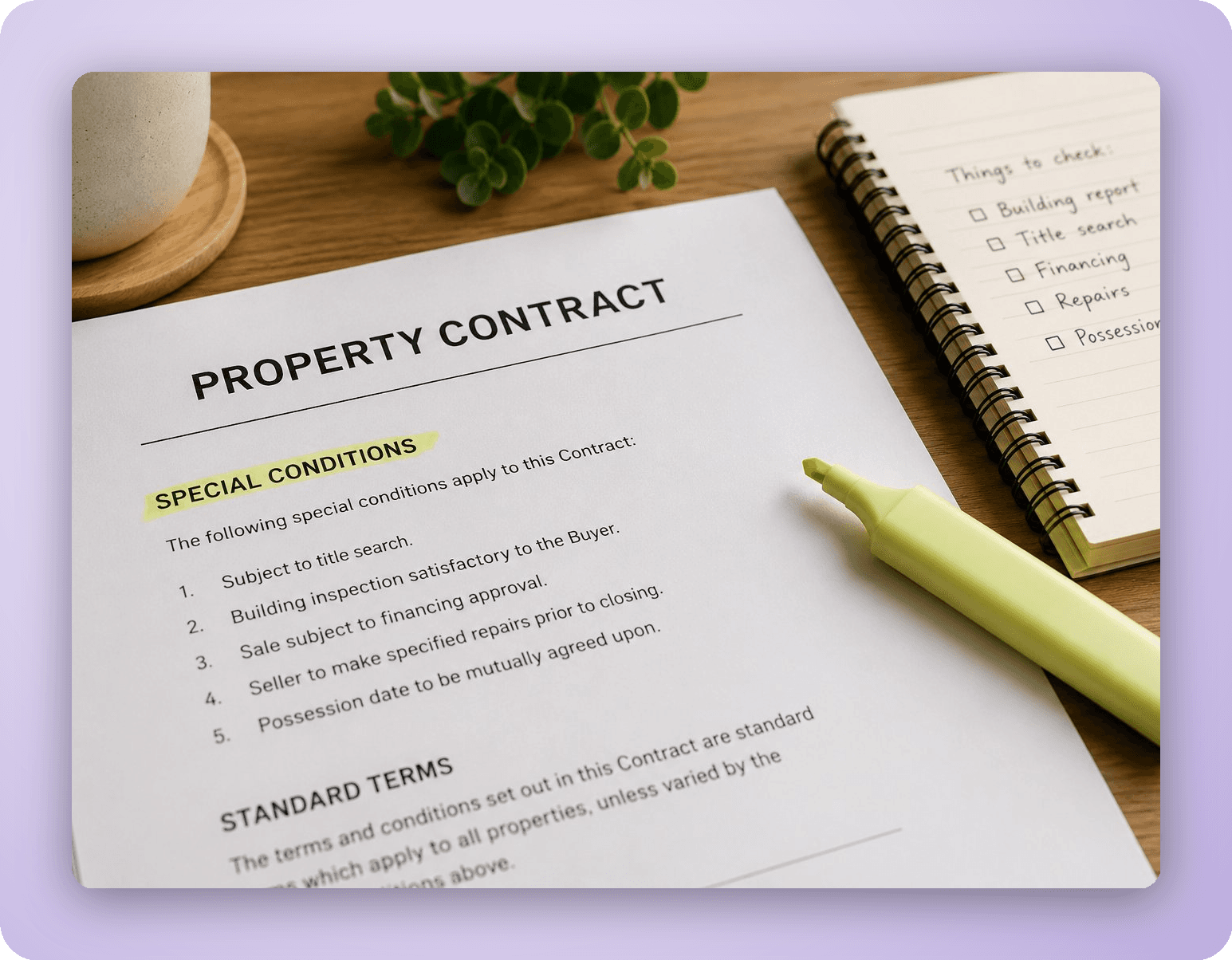
Reviewing the contract terms: beyond the Section 32, we review the Contract of Sale itself, including the general conditions and any special conditions. We check that key terms like the settlement period, deposit amount, and any conditions (such as finance or building inspection clauses) are appropriate.
Identifying risks and red flags: based on everything we find, we provide you with a summary of the key issues and risks. We'll tell you what's normal, what's potentially problematic, and what might warrant further investigation.
Red flags we look for
Not every issue is a dealbreaker, but some things warrant closer attention or further investigation. Here are some common red flags we watch for:
Unregistered easements or covenants: sometimes restrictions exist that aren't registered on the title. These can be harder to enforce but may still affect your use of the property.
Planning overlays: heritage overlays can limit your ability to renovate. Bushfire overlays may require expensive building modifications. Flood overlays can affect insurance costs and resale value.
Owners corporation issues: large upcoming special levies, ongoing disputes, or poorly maintained common property can be costly headaches for new owners.
Building work without permits: renovations or additions done without proper permits can create compliance issues. You may inherit the responsibility to fix or remove non-compliant work.
Owner-builder work: work done by owner-builders may not be covered by the usual statutory warranties. If defects emerge, you may have limited recourse.
Unusual special conditions: sometimes contracts include conditions that favour the seller or create unexpected obligations for the buyer. We'll flag anything that looks out of the ordinary.
Incomplete or missing information: if the Section 32 is missing required information, this could give you the right to withdraw from the contract.
Why it matters before you sign
Once you sign a contract to buy property in Victoria, you're legally committed (subject to any conditions in the contract and your cooling-off rights).
The cooling-off period in Victoria is three business days for private sales. It doesn't apply if you buy at auction. If you pull out of the contract during the cooling-off period, you'll forfeit 0.2% of the purchase price.
After the cooling-off period ends, pulling out of the contract becomes much more difficult and expensive. You could lose your full deposit (typically 10% of the purchase price) and potentially face legal action from the seller.
This is why getting a contract reviewed before you sign is so important. It's much easier to walk away from a problem property before you're contractually committed than after.
Even if you're buying at auction, where there's no cooling-off period, you can still have the contract reviewed beforehand. In fact, we'd strongly recommend it. Once the hammer falls, you're committed.
Get your contract reviewed for free
At nextstep, we offer free same-day contract reviews for properties in Victoria. There's no obligation – if you decide not to proceed with the purchase, or if you choose to use a different conveyancer, that's completely fine.
We believe everyone deserves to understand what they're signing before they commit to one of the biggest purchases of their lives
How to get your contract reviewed
Getting a contract review is straightforward:
Obtain the contract: ask the real estate agent for a copy of the Contract of Sale and Section 32. They're required to provide this to any serious buyer.
Send it to us: you can upload the documents directly through our website or email them to us.
We review and report back: we'll review the documents and provide you with a clear summary of the key issues, typically within the same business day.
Ask questions: if anything isn't clear, we're happy to explain it in plain English. No legal jargon required.
The bottom line
A Section 32 review isn't just a box-ticking exercise. It's your opportunity to understand exactly what you're buying before you commit.
Whether it's an easement that affects your renovation plans, an owners corporation with financial problems, or a planning overlay that limits your options, it's better to know now than after settlement.
If you're looking at a property in Victoria and want a professional set of eyes on the contract, we're here to help.
Stay informed with the latest guides and news.