Statement of Adjustments: who pays what at settlement
5
min read
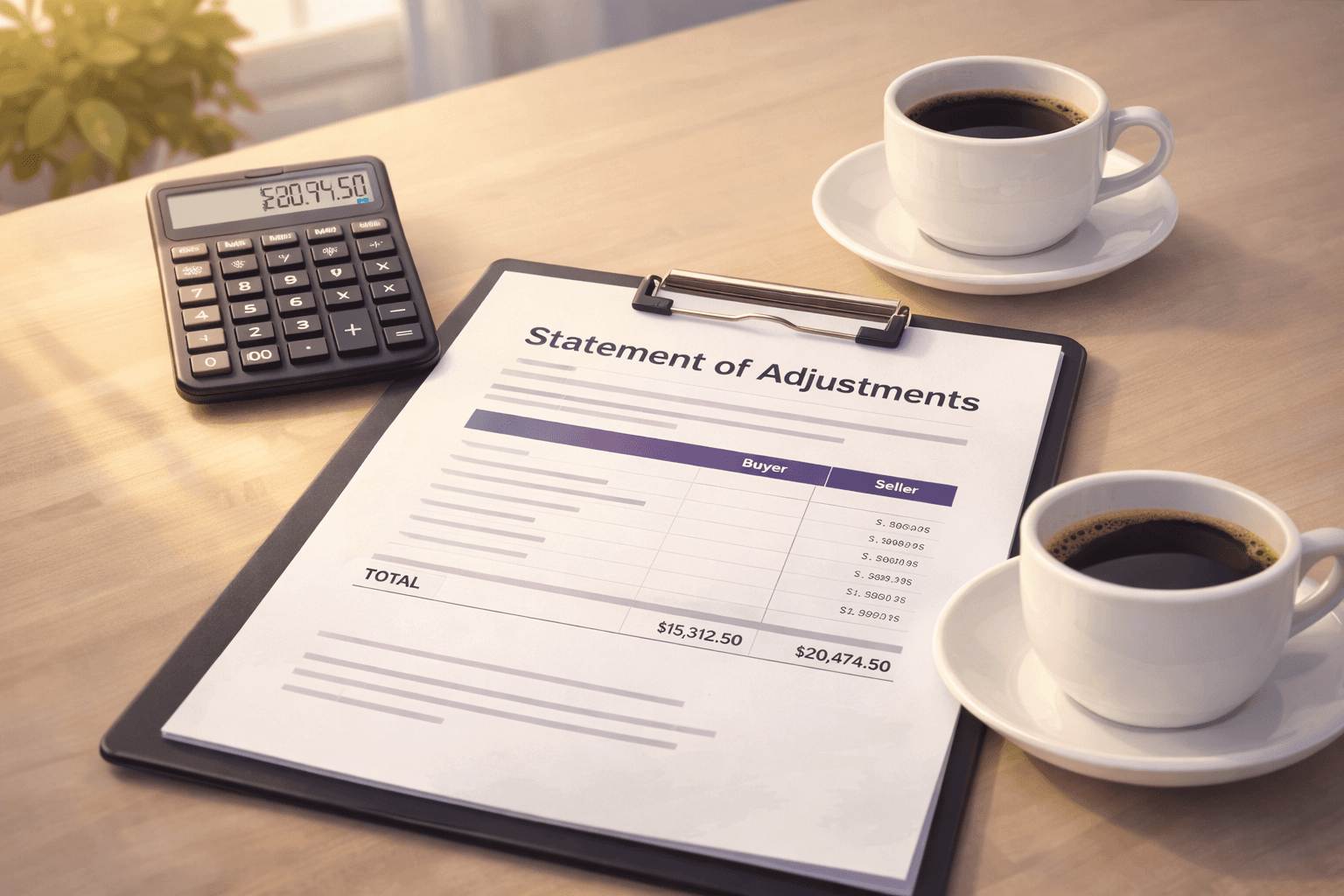
Settlement is getting closer, and your lawyer has sent you something called a "statement of adjustments." It's a page of numbers, and none of them are the purchase price you were expecting. That's normal. The statement of adjustments is how your lawyer works out the final dollar amount that changes hands on settlement day – and it's almost never just the purchase price.
Here's what's in it and why it matters.
What is a Statement of Adjustments?
A statement of adjustments (sometimes called a settlement statement) is a financial document that calculates how property-related expenses are split between the buyer and seller based on the settlement date. The principle is straightforward: the vendor pays for the period they owned the property, and the purchaser pays for the period from settlement onwards.
In Victoria, the obligation to prepare adjustments comes from General Condition 23 of the standard Law Institute of Victoria (LIV) contract of sale. Your lawyer handles the calculations – you don't need to work any of this out yourself.
What gets adjusted?
Council rates
Council rates are usually billed annually or quarterly. If the vendor has already paid the full year's rates but settlement happens partway through the year, the purchaser reimburses the vendor for the portion covering the period after settlement. If the rates haven't been paid yet, the vendor's share gets deducted from the settlement funds.
Water rates
Similar to council rates, water rates are adjusted so each party pays for their period of ownership. This typically includes the service charge and any usage charges that can be apportioned.
Land tax
If you're buying or selling a home or investment property in Victoria, you might expect to see land tax on the statement of adjustments – but for most transactions, you won't. Since 1 January 2024, Victorian law prohibits vendors from passing land tax costs to purchasers at settlement where the sale price is below the threshold amount (currently $10.7 million for 2026, indexed annually). This applies to contracts entered into on or after 1 January 2024, and any clause that tries to shift land tax to the buyer is void. It's actually an offence for a vendor to include one. This is a significant change from the old position. Previously, land tax was routinely adjusted between the parties on a "single holding" basis – the vendor would be reimbursed for the portion of the year after settlement. That no longer happens for the vast majority of residential sales. The vendor bears the full year's land tax liability.
What this means in practice: If the vendor owned the property at midnight on 31 December, they are assessed for that entire year's land tax. There is no part-year refund from the State Revenue Office just because ownership changes hands during the year. Purchasers should not see a land tax line on their statement of adjustments for any sub-threshold transaction.
Even though land tax is no longer adjusted, your lawyer will still obtain a property clearance certificate from the SRO. This is important because land tax is a first charge on the land – meaning if the vendor's land tax goes unpaid, it can follow the property. Your lawyer will make sure any outstanding amount is paid from the vendor's settlement funds so the title is clear. For sales above the threshold amount ($10.7 million in 2026), land tax adjustments can still be negotiated between the parties, but this is uncommon in standard residential conveyancing.
Owners corporation fees
If you're buying an apartment, unit, or townhouse in a managed complex, the owners corporation fees are adjusted too. These are usually billed quarterly. If the vendor has paid ahead, you'll reimburse them. If fees are outstanding, they get deducted.
Rent and bonds (tenanted properties)
If the property is sold subject to existing tenancy, the adjustments also account for any rent paid in advance by the tenant and the bond lodged with the Residential Tenancies Bond Authority (RTBA).
How the final figure is calculated
The settlement figure starts with the purchase price, then:
Minus the deposit already paid
Plus or minus each adjustment (rates, OC fees, rent)
Equals the amount the purchaser pays at settlement
Your lawyer will send you the statement before settlement so you can arrange the correct funds. If you're borrowing, your lender will need these figures too — they're factored into the loan drawdown.
Who prepares it?
In Victoria, the purchaser's lawyer typically prepares the statement of adjustments and sends it to the vendor's lawyer for review. Both sides check the figures, and any discrepancies get resolved before settlement day. This back-and-forth is a normal part of the settlement process.
What if there are errors?
Mistakes happen – a rates notice might be outdated, or an owners corporation levy might have changed. If an error is discovered after settlement, the contract usually allows for a post-settlement adjustment. Your lawyer can arrange this, but it's always easier to get the numbers right before settlement rather than chasing corrections afterwards.
What about penalty interest?
If settlement is delayed by either party, penalty interest may apply. The standard rate in Victorian contracts is 10% per annum, which is set by the Penalty Interest Rates Act 1983.
However, it's common for contracts to include special conditions that change the penalty interest rate – sometimes adding 2% or even 4% above the statutory rate, or imposing additional costs for delayed settlement. This is one of the things your lawyer should flag when reviewing the contract before you sign.
Penalty interest compensates the vendor who was ready to settle on time. Your lawyer will factor any penalty interest into the adjusted figures if a delay occurs.
How Nextstep Legal handles adjustments
At Nextstep Legal, preparing and checking the statement of adjustments is a standard part of every conveyancing file. We obtain the latest rate notices and owners corporation certificates, calculate the adjustments, and explain the final settlement figure to you before the day arrives – so there are no surprises.
If you're a purchaser, we'll walk you through exactly how much you need to have available. If you're a vendor, we'll make sure the figures are fair and accurate.
Getting close to settlement? If you have questions about your statement of adjustments or want to understand the numbers, reach out to our team and we'll talk you through it.
This article provides general information about Victorian property law. It's not a substitute for legal advice on your specific situation. If you'd like to discuss your circumstances, get in touch.
Stay informed with the latest guides and news.