Why your lawyer needs to verify your identity before settlement
5
min read
Shortly after you engage a lawyer for your property transaction, they'll ask you to complete something called a "VOI". It might feel like an odd request when you've already signed up and handed over personal details, but it's a legal requirement in Victoria, and it exists for a very good reason.
What is a VOI?
Verification of Identity (VOI) is a formal process that confirms you are the person legally entitled to deal with the property. It's required under the Transfer of Land Act 1958 (Vic) and the Model Participation Rules set by the Australian Registrars' National Electronic Conveyancing Council (ARNECC).
The short version: before your lawyer can lodge any documents on the land titles register, whether that's a transfer of ownership, a mortgage, or a discharge, they must verify that you're actually you.
Why does it exist?
Property fraud is more common than most people realise. There have been documented cases in Australia of criminals impersonating property owners to fraudulently sell or mortgage land, particularly targeting owners who are overseas, elderly, or own vacant land they don't regularly check on.
VOI was introduced to stop this. By requiring identity checks with original documents, the system makes it significantly harder for someone to pose as a property owner and walk away with the proceeds of a sale or a fraudulent mortgage.
What documents do you need?
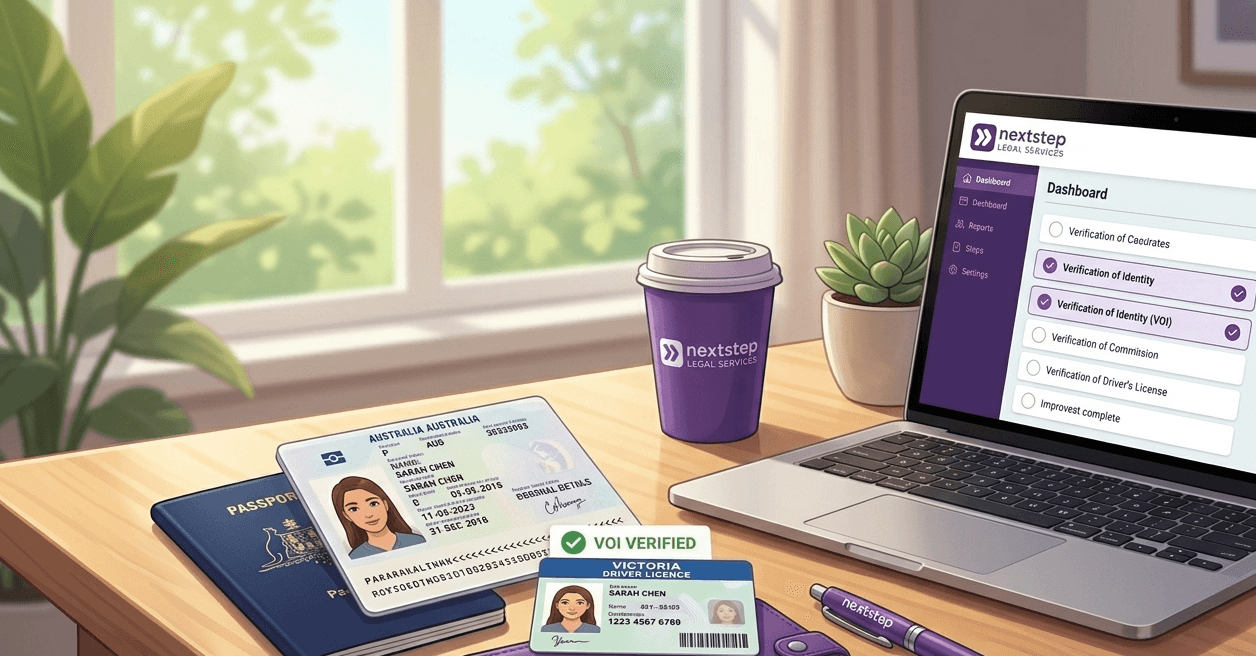
The standard VOI process requires you to produce original identity documents from specific categories. A typical combination includes:
A current Australian passport or foreign passport with a valid visa
A current Australian driver's licence or learner's permit
A birth certificate, citizenship certificate, or descent certificate
Your lawyer will tell you exactly which documents they need based on your circumstances. The key point: they must be originals, not copies, and they must be current (not expired).
What this means in practice: You'll attend a short interview, either in person at your lawyer's office or via a verified digital VOI service, where your documents are sighted, copied, and certified. The whole thing usually takes 5 to 10 minutes.
How the VOI interview works
The interview itself is straightforward. Your lawyer (or an authorised agent) will meet with you, sight your original documents, take certified copies, and confirm your identity against the information on the property title.
The copies are retained on file for seven years as required by the ARNECC Model Participation Rules. Once completed, a VOI remains valid for the purposes of that transaction. If you're involved in another property transaction later, your lawyer may need to conduct a fresh VOI depending on the circumstances and how much time has passed.
What about remote VOI?
If you can't attend in person – say you're interstate or overseas – there are approved digital VOI options. Services like those offered by InfoTrack and other providers allow identity verification via video call with a qualified verifier. Your lawyer can arrange this for you. Australia Post also offers VOI services for parties who are not represented by a lawyer.
When does it happen?
VOI should be completed early in the conveyancing process, ideally within the first week or two of engaging your lawyer. Leaving it until the last minute can cause unnecessary stress and even delay settlement.
Your lawyer can't lodge documents in PEXA without confirming that VOI has been completed, so it's in everyone's interest to get it done promptly.
What happens if you don't do it?
Put simply: your transaction can't proceed. Your lawyer is legally obligated to verify your identity before signing documents on your behalf in PEXA. No VOI, no settlement. There are also professional indemnity implications for lawyers who fail to conduct proper VOI checks – it's taken very seriously by the profession and by Land Use Victoria.
How Nextstep Legal handles VOI
At Nextstep Legal, we make the VOI process as painless as possible. We'll let you know exactly what documents you need, arrange a convenient time for the interview (in person or digitally), and get it completed early so it doesn't hold anything up.
If your situation is more complex – for example, if you've recently changed your name, if you're acting under a power of attorney, or if you're overseas – we'll walk you through the additional steps required.
Starting a property transaction? Get in touch with Nextstep Legal and we'll guide you through the VOI process along with everything else you need for a smooth settlement.
This article provides general information about Victorian property law. It's not a substitute for legal advice on your specific situation. If you'd like to discuss your circumstances, get in touch.
Stay informed with the latest guides and news.