Cooling-off period in Victoria: your rights explained
6
min read
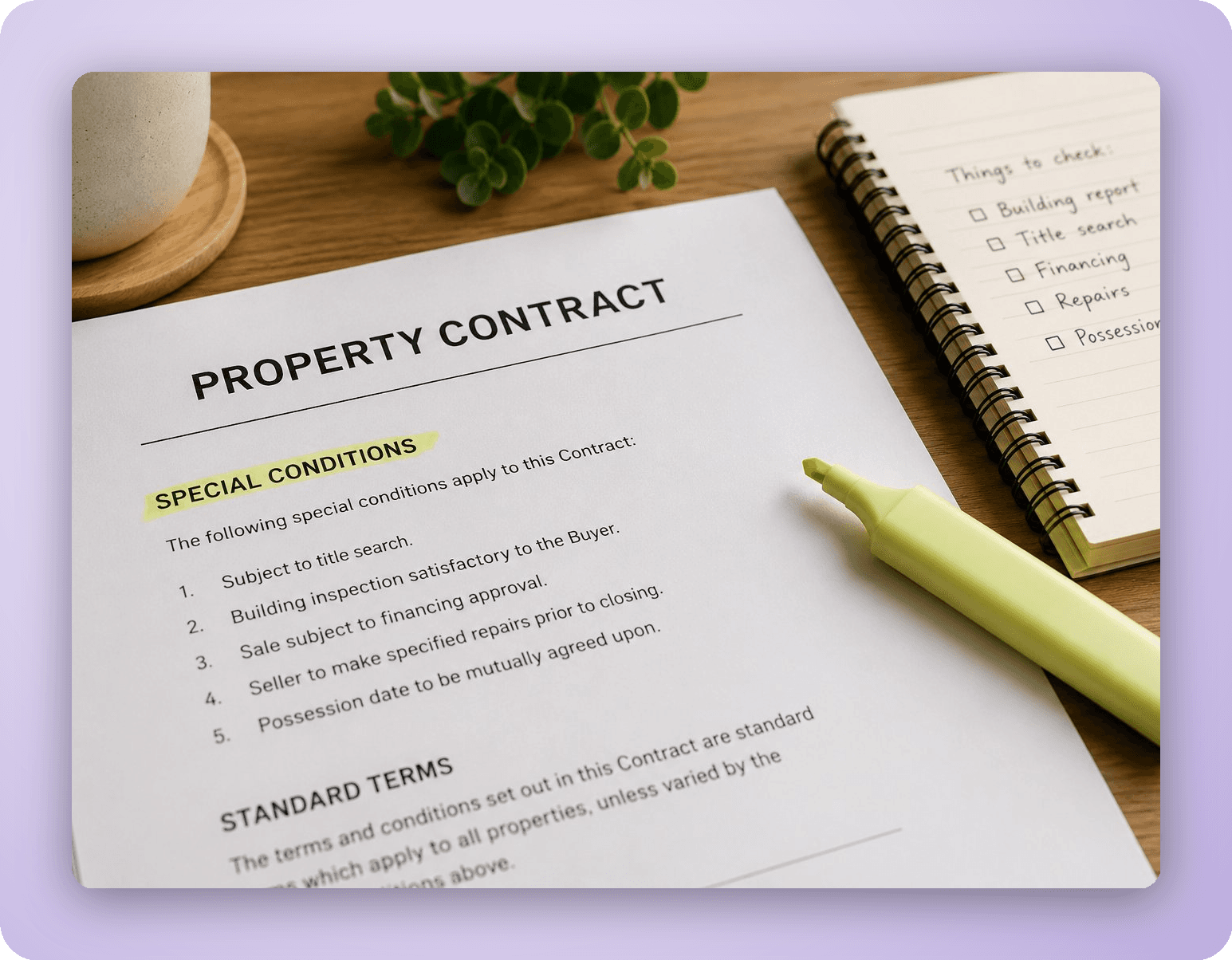
You've just signed a contract of sale on a property. You're probably feeling excited. Maybe nervous. You could even be second-guessing yourself and wondering: can I still change my mind?
In most cases, yes – for a short window. In Victoria, the law gives residential property buyers a cooling-off period after signing a contract. It's a brief but powerful safety net, and understanding how it works could save you from a very expensive mistake.
What is the cooling-off period?
The cooling-off period is a statutory right under Section 31 of the Sale of Land Act 1962 (Vic). It gives buyers of residential property a short window – three clear business days – to withdraw from a signed contract of sale, for any reason, without needing to justify the decision.
In practice, this means you can walk away from a purchase if something doesn't feel right, your finances change, or you simply have a change of heart. You don't owe the vendor an explanation.
Think of it as a brief pause button. It won't undo everything for free (there is a small penalty, which we'll cover below), but it gives you a chance to step back before you're locked in.
How long is it, and when does the clock start?
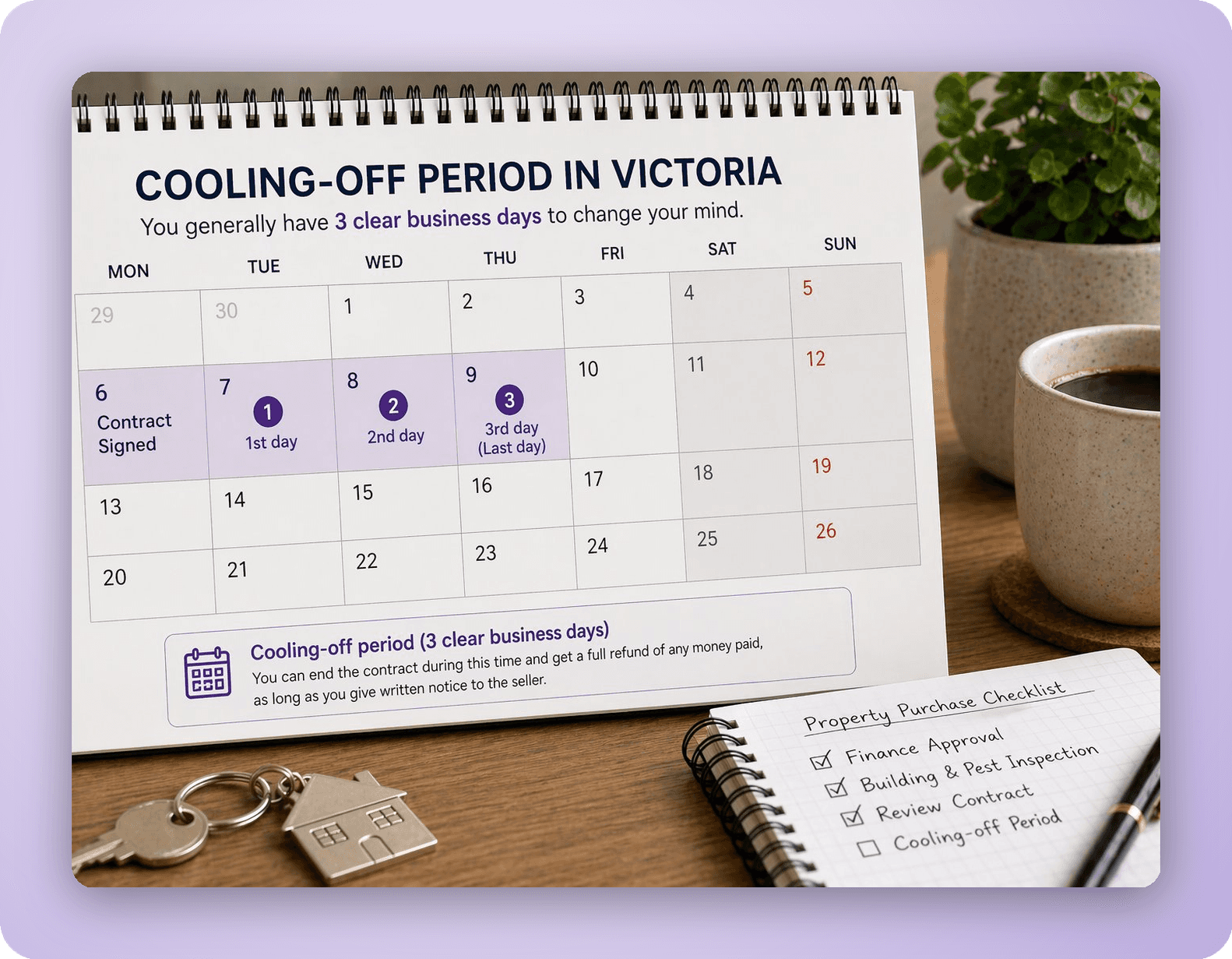
The cooling-off period is three clear business days. "Clear" means you don't count the day you sign the contract, and you don't count weekends or public holidays.
Here's what that looks like in practice:
Example 1: You sign the contract on a Monday. The cooling-off period runs Tuesday, Wednesday, and Thursday. You have until the end of Thursday to withdraw.
Example 2: You sign on a Friday. The cooling-off period starts on Monday and runs through to the end of Wednesday.
Example 3: You sign on a Friday before a long weekend (with Monday being a public holiday). The cooling-off period starts on Tuesday and runs through to the end of Thursday.
One important detail that catches many buyers off guard: the clock starts when you sign the contract – not when the vendor signs it. Even if the vendor hasn't signed yet and the contract isn't technically binding, your three-day window is already ticking. This is one of the most misunderstood parts of the cooling-off rules, and it's worth paying attention to.
As for the deadline on the final day, general practice treats 5:00 pm as the cut-off, although the legislation doesn't specify an exact time. The safe approach is to never leave it until the last hour. If you're thinking about cooling off, act early.
What does it cost to cool off?
Walking away isn't free. If you exercise your cooling-off rights, the vendor is entitled to keep a penalty of $100 or 0.2% of the purchase price – whichever is greater.
On a $750,000 property, that's $1,500. On a $1,000,000 property, it's $2,000.
The penalty is deducted from your deposit. You get the rest back.
Is $1,500 or $2,000 a lot of money? Yes. But it's a fraction of what you'd lose by settling on the wrong property. If something genuinely isn't right – the building inspection turns up structural issues, your finance falls through, or the contract review reveals a problem you weren't expecting – the cooling-off penalty is a small price to pay.
When does the cooling-off period NOT apply?
This is the part you really need to understand, because there are several situations where you won't get a cooling-off period at all. Once you sign, you're locked in.
Auction purchases
The most significant exception. There is no cooling-off period if you buy a property at auction. When the hammer falls, the sale is final.
But the exclusion goes further than auction day itself. You also lose your cooling-off rights if you sign a contract within three clear business days before or after a scheduled auction – even if the auction doesn't go ahead, and even if the property is passed in.
Example: A property is listed for auction on Saturday 14 June. The three business days before the auction are Wednesday 11, Thursday 12, and Friday 13 June. If you make a pre-auction offer and sign a contract on any of those days, you won't have a cooling-off period. Similarly, if the property passes in and you negotiate and sign after the auction, the exclusion applies for the following three business days.
This "auction exclusion zone" is one of the most common traps for buyers. If you're considering making an offer before or shortly after an auction, you need to treat it the same way as bidding at auction – do all your due diligence beforehand, because there's no safety net once you sign.
Other exceptions
The cooling-off period also doesn't apply if:
You're buying commercial or industrial property (not residential)
You're purchasing land over 20 hectares that is used primarily for farming
You're buying as a company or corporate entity (individuals and trusts are generally still covered)
You're a licensed real estate agent buying in your own capacity
You've previously signed a contract for the same property on substantially the same terms
If you're unsure whether your purchase qualifies for a cooling-off period, this is exactly the kind of thing to check with your lawyer before signing – not after.
What should you do during the cooling-off period?
Three business days sounds like a reasonable amount of time until you're actually in the middle of it. Those days disappear fast. Here's how to make the most of them.
1. Get your contract reviewed
If you haven't already had a lawyer review the contract of sale and Section 32, this is your first priority. A contract review will flag issues with the title, unusual special conditions, missing disclosures, and anything else that might affect your decision to proceed.
At NextStep Legal, we offer a free contract review for all Victorian buyers – and we turn them around the same day, because we know how tight this window is. Get yours now.
2. Arrange a building and pest inspection
If you haven't already organised one, get it booked immediately. Three days is tight but usually workable for a building inspector, especially if you call first thing the morning after signing.
A building inspection can uncover issues that aren't visible during a standard open home – structural defects, rising damp, termite damage, roof problems. Any of these could be a valid reason to exercise your cooling-off rights.
3. Confirm your finance
Speak to your broker or lender. Make sure your pre-approval is still current and that the property you've signed on falls within your borrowing capacity. Pre-approvals can expire or have conditions you haven't fully satisfied yet.
4. Take a breath and think it through
This sounds obvious, but the cooling-off period exists precisely for this reason. Sleep on it. Talk it over with your partner, your family, or whoever is making this decision with you. If something felt off during the inspection or negotiation, give yourself permission to sit with that feeling.
How do you actually cool off?
If you decide to withdraw, you need to give written notice before the cooling-off period expires. An email is generally accepted for this.
Your notice should clearly state that you're cancelling the contract under Section 31 of the Sale of Land Act 1962, and it needs to be sent to either the vendor, the vendor's solicitor or conveyancer, or the real estate agent. We recommend notifying multiple parties to avoid any dispute about whether proper notice was given.
If you have a lawyer acting for you, they'll handle this. It's one of those things where getting the process right matters — a notice sent to the wrong party or received after the deadline could mean you haven't properly cooled off, even if you intended to.
The bigger picture: don't rely on the cooling-off period
The cooling-off period is a valuable safety net, but the best approach is to do your homework before you sign – not after.
Getting a contract reviewed before signing, organising inspections early, and having your finance sorted in advance means you can sign with confidence. The cooling-off period then becomes a backup rather than your primary plan.
If you're buying a property in Victoria and want your contract reviewed before you commit, request your free contract review here or get in touch for a quote.
This article provides general information about Victorian property law. It's not a substitute for legal advice on your specific situation. If you'd like to discuss your circumstances, get in touch.
Stay informed with the latest guides and news.